
Case Study
Designing a Scalable CMS Platform for Financial Institutions
Shaping the UX architecture and design systems behind a modular platform used by 30–50 regulated institutions.
ROLE: Product & Systems Design Lead (CMS Evolution)
Overview
At Level 9, we designed and built digital platforms for financial institutions. In addition to custom website design, we developed our own proprietary CMS—known internally as the L9 platform.
Over time, we recognized a recurring challenge across the institutions we worked with. Most needed sophisticated digital platforms but lacked the internal resources to build and maintain them. Traditional agency projects often resulted in one-off websites that were costly to update, difficult to scale, and inconsistent over time.
To address this, we evolved the L9 platform into a productized CMS that could support many institutions while still allowing each organization to maintain its own brand, content structure, and operational needs.
Platform Evolution & Systems Foundation
I was involved with the CMS from its early days and helped shape it into a scalable platform used by 30–50 regulated financial institutions. My work focused on building the underlying experience framework that allowed the system to evolve consistently as new institutions and features were added.
My responsibilities included:
Defining UX and structural architecture across the platform
Designing reusable interaction patterns and interface components
Adapting design decisions to engineering constraints
Establishing design governance across deployments
Guiding feature evolution based on client and user needs
Rather than functioning as a series of one-off builds, the CMS operated as a modular digital product. Each deployment shared a common architecture, design system, and feature set, allowing improvements made in one environment to strengthen the platform as a whole.
To support scalability, we established a shared UX framework and design system that defined navigation patterns, content structures, and interaction behaviors across all deployments.
As the platform matured, I introduced a custom responsive framework—one I had already implemented successfully on public-facing sites—into the administrative interface. This created structural consistency between backend tools and the frontend experiences they produced.
Over time, the platform evolved through versioned updates and feature releases. Enhancements built for one institution could be integrated into the core platform and rolled forward into future implementations.
At the time, many institutions were struggling with duplicated content, manual updates, inconsistent UI patterns, and frequent publishing errors. I introduced a unified design system across the CMS to standardize interaction patterns and reduce cognitive load. With that foundation in place, the platform began operating less like a collection of disconnected tools and more like a deliberate, extensible system. Over time, the system powered dozens of institutional websites and supported thousands of content updates, internal workflows, and customer-facing interactions.
From Page-Based Editing to Modular Architecture
As usability improved, deeper structural inefficiencies became more visible—particularly around duplicated content and governance risk. I proposed and helped design a modular content system we called “Bits” (short for “bits of content”), introducing an object-based architecture that allowed content to be created once and deployed across any number of pages. Rather than tying content directly to page templates, Bits centralized content management and separated structure from presentation. This reduced duplication, minimized publishing errors, and dramatically simplified ongoing updates across institutions.
Content as Configuration: Bridging Backend Structure and Frontend Design
“Bits” evolved beyond content distribution into a configurable design engine. Administrators could define custom “bit types” composed of structured fields mapped directly to front-end templates. These templates were integrated with the platform’s HTML and CSS framework, allowing users to configure and deploy branded components dynamically. A user could create a Bit, adjust its design variables, and publish it across multiple pages—rendered with institution-specific branding—within minutes. This shift transformed the CMS from a static publishing tool into a scalable content and design configuration system.
Platform Tradeoffs & Multi-Tenant Strategy
Operating in a multi-tenant environment meant constantly balancing flexibility with scalability. Institutions frequently requested custom solutions, and we evaluated whether those edge cases were proprietary to that client, or signals of broader platform opportunity. When patterns emerged—especially within the shared operational models of credit unions—we generalized those needs into reusable features. When requests were truly one-off, we contained them without compromising system integrity. This approach allowed the platform to evolve strategically while maintaining architectural discipline.
Systems Thinking Across Domains
While this platform was built for regulated financial institutions, the underlying challenges—structured content modeling, reusable objects, role-based governance, multi-tenant scalability, and frontend/backend integration—are common to any complex commerce or catalog-driven system. Designing Bits required thinking beyond screens and toward durable architecture: defining object hierarchies, balancing flexibility with standardization, and ensuring operational efficiency at scale. That systems-first approach continues to inform how I evaluate and design product platforms today.
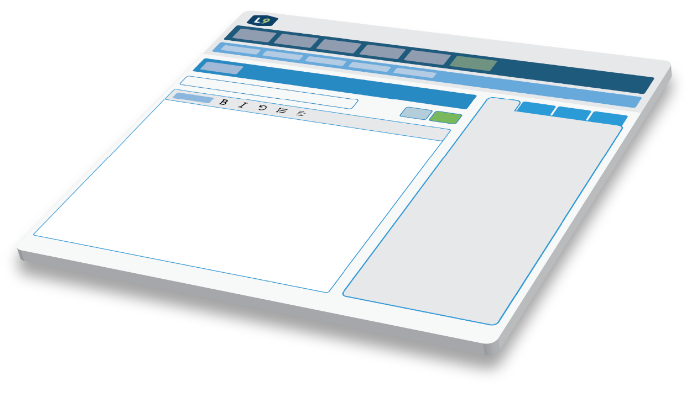
“While this platform was built for regulated financial institutions, the underlying challenges—structured content modeling, reusable objects, role-based governance, multi-tenant scalability, and frontend/backend integration—are common to any complex commerce or content-driven system. ”